
Platin casino Plinko game
Introduction
Plinko looks almost disarmingly simple at first glance. A ball drops from the top of the board, bounces off a field of pegs, and lands in a payout slot at the bottom. That is the whole visual idea. Yet in practice, Platin casino Plinko creates a very specific kind of tension that many classic Sweet Bonanza slot checklist do not reproduce in the same way. The interface is clean, the rules are easy to grasp in under a minute, and still the actual session can feel far more volatile, faster, and mentally engaging than the minimalist design suggests.
I have spent enough time studying casino games to know that simple presentation often hides very different player experiences underneath. Plinko is one of the clearest examples. It does not rely on reels, paylines, bonus rounds, or a long list of symbols. Instead, it builds interest through visible randomness, adjustable risk, and a rhythm that can switch from casual to intense depending on the settings. That is exactly why the format has become so noticeable across modern gaming platforms.
For players in Canada who are considering Plinko at Platin casino, the key question is not whether the interface looks appealing. The real question is what this game actually offers over the course of a session, how its mechanics shape outcomes, and whether its style fits the way you prefer to play. In this review, I will focus strictly on that: how Plinko works, what matters before you launch it, where the excitement comes from, and where caution is justified.
What Plinko is and why it attracts so much attention
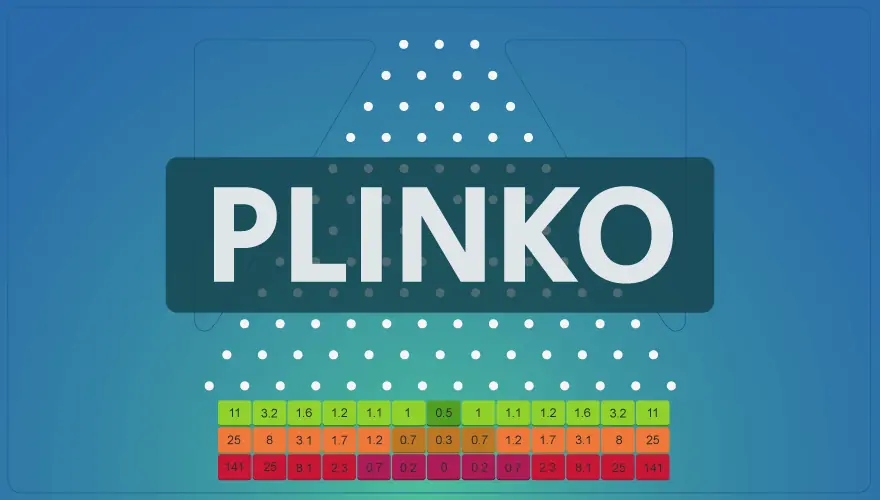
Plinko is a chance-based casino game built around a vertical board filled with pegs. The player selects a stake, usually chooses a risk level, and then drops one or multiple balls from the top. As each ball falls, it deflects left or right at every contact point until it finally lands in one of several multiplier slots. The resulting return is simply the stake multiplied by the value of the final slot.
That structure matters because it makes randomness visible. In a slot, the result is presented after the spin resolves. In Plinko, the player watches the path unfold in real time. Even though the outcome is still governed by a random number generator, the visual descent gives the impression of a physical process. This is one reason the format has become so noticeable: it turns abstract probability into something players can follow with their eyes.
Another reason for its visibility is accessibility. A new player does not need to learn paytables, symbol hierarchies, expanding wilds, cascading reels, or bonus-buy logic. Plinko strips the experience down to a few core decisions:
- Choose the stake.
- Select the number of rows, if the version allows it.
- Pick a risk level.
- Drop the ball and accept the result.
That low barrier to entry is important. It means the game can appeal both to experienced casino users who want a fast, direct format and to casual players who prefer something less layered than a video slot.
There is also a more subtle reason why Plinko stands out. It creates suspense without needing a bonus round. The whole event is the suspense. You do not wait for a feature to trigger because the movement itself is the feature. That makes every drop feel self-contained, and in a short session that can be surprisingly effective.
How the core mechanics of Plinko actually work
At a practical level, the logic of Plinko is built around distribution. The board is designed so that central landing zones are typically easier to hit, while the outermost slots are rarer and therefore often carry the highest multipliers. In other words, the most attractive returns usually sit where the ball is least likely to land.
That distribution is the first thing a player should understand before placing real-money drops. The board may look symmetrical, but the payout profile is not generous across all positions. Most outcomes tend to cluster around lower multipliers or modest returns, while the exceptional hits sit at the edges and occur far less often.
In many versions of Plinko, including the style commonly seen on modern casino platforms, the player can adjust several variables:
- Stake size — determines the value of each drop.
- Risk level — changes the payout spread, usually from lower and steadier to sharper and more extreme.
- Rows — affects the number of bounce decisions and the shape of the probability curve.
- Auto-play or rapid drops — speeds up the session and can materially change bankroll behavior.
The risk setting deserves special attention. This is where the same Plinko board can produce very different experiences. On lower risk, the multiplier map is flatter. Returns are generally less dramatic, but the session often feels smoother because there are fewer extreme swings. On higher risk, the board becomes more top-heavy: many drops may end in small returns or losses, while a tiny portion can reach significantly larger multipliers.
That means the game’s simplicity is only surface-level. The player is not just dropping a ball. The player is choosing a probability profile. And that choice changes the emotional texture of the session more than the clean interface suggests.
Why the pace feels so different in a real session
Plinko has a distinctive tempo. It is faster than many roulette information inside Platin Casino for detailed casino comparison because there is no dealer cycle, no betting window, and no strategic pause. It can also be faster than a lot of slots because the result sequence is short and visually immediate. A drop begins, the ball bounces, the slot is reached, and the next round is ready almost instantly.
That speed is not just a cosmetic detail. It changes how the bankroll moves. In a slot, players often have a few more visual layers between one result and the next: reel animation, symbol evaluation, maybe a small line hit, maybe a tease for a feature. In Plinko, there is less friction. Sessions can accelerate quickly, especially if auto mode is enabled or if the player starts dropping multiple balls in sequence without reflection.
This is where many people misread the format. Because the board looks playful and the rules are easy, they assume the experience is light. In reality, Plinko can burn through a balance faster than expected if the stake is not calibrated carefully. A minimalist interface often reduces the psychological pause that would otherwise help a player slow down.
One of the most memorable things about Plinko is that it creates tension through repetition rather than progression. There is no storyline, no bonus ladder, no collection meter. The excitement comes from watching many small probability events unfold one after another. For some players, that is exactly the appeal. For others, it can start to feel mechanically narrow after a while. Before you make a deposit, it is worth reading Platin Casino no deposit bonus codes page for the fee and speed details.
Risk levels, probabilities, and what they mean in practice
When players ask whether Plinko is risky, the honest answer is that the game can sit across a broad spectrum depending on the settings. The base concept is always random, but the selected configuration determines whether the session behaves more like a steady drip of modest outcomes or a hunt for rare, outsized multipliers.
Here is the practical way to think about it: the higher the potential top payout, the more often you should expect ordinary or disappointing results in between. This is not a flaw. It is the mathematical trade-off that makes the larger multiplier possible.
| Setting | What usually changes | What the player feels |
|---|---|---|
| Low risk | Narrower payout range, more central outcomes | Smoother session, fewer sharp swings |
| Medium risk | Broader spread between common and rare results | Balanced rhythm, moderate tension |
| High risk | More extreme multiplier map, rare edge hits matter more | Long dry stretches with occasional big spikes |
It is also important to separate visual randomness from actual control. The ball appears to bounce organically, but the result is still part of a regulated game logic rather than a skill challenge. You are not steering the path. Watching the ball descend can make the process feel tactile, yet from a player-value perspective the crucial variables remain RTP, multiplier distribution, and session discipline.
A useful observation here is that Plinko often feels “almost there” more often than it truly is. A ball may drift toward a high-paying outer zone and then bounce back toward the middle at the last second. That near-miss sensation is part of the game’s emotional pull. It makes each drop look dramatic even when the actual return is modest. Players should recognize that effect for what it is: presentation, not evidence of a pattern forming.
Who Plinko suits and who may not enjoy it for long
Not every casino game fits every player profile, and Plinko is a good example of that. I would say it suits players who enjoy short decision cycles, visible randomness, and direct control over session parameters like stake and risk level. It can also work well for people who do not want to decode a complicated slot structure before they understand what is happening.
It may be a good fit if you prefer:
- Fast rounds with minimal waiting.
- Clear stake-to-result logic.
- A format where changing one setting noticeably alters the session style.
- Short play sessions rather than long feature hunts.
On the other hand, Plinko may not satisfy players who want layered content. If you enjoy evolving bonus rounds, symbol combinations, narrative themes, or the build-up of free spins, the game can feel too stripped back. There is not much decorative depth here. Its strength is concentration, not variety.
It may also frustrate players who mistake visual simplicity for stability. Some sessions can feel calm, especially on lower-risk settings, but the game is still driven by probability and can produce uneven stretches. If you dislike repeated low-value outcomes while waiting for a stronger hit, you may prefer a different format.
What to understand about session rhythm before you start
Before launching Platin casino Plinko, I recommend thinking less about the maximum multiplier and more about the likely shape of your session. That is where many players make better decisions. The top number on the board is eye-catching, but it does not tell you how often you will encounter small returns, partial losses, or sequences that look active without materially helping your balance.
Three practical points matter most:
- Ball count matters over time. Even small stakes add up quickly when the pace is fast.
- Risk settings change the emotional experience. The same bankroll can feel very different on low and high configurations.
- Auto-play can flatten judgment. It is easy to stop evaluating outcomes when the game becomes a stream.
This is one of the few casino formats where reducing speed can genuinely improve awareness. Watching a handful of manual drops tells you more about the feel of the session than launching a long automated sequence immediately. That is especially true for newer players who want to understand whether the game’s rhythm suits them at all.
Another useful point: Plinko does not always reward patience in the way slots sometimes seem to. There is no feature meter to “wait out.” Each drop is a separate event. That means chasing a previous near miss has no logical basis, even though the board presentation can tempt players into thinking the next edge hit is due.
How Plinko differs from slots and other casino games
The clearest difference between Plinko and classic slots is structural. Slots are built around symbol combinations, reel stops, and often layered bonus design. Plinko is built around one visible path and one final landing point. That gives it a cleaner cause-and-effect feel, even though the underlying randomness is still there.
Compared with roulette, Plinko is more animated and visually personal. Compared with Platin Casino game library review for online casino players, it removes decision-making depth almost entirely. Compared with crash-style formats, it offers suspense without asking the player to time a cash-out. In that sense, it occupies a useful middle ground: more visual than a simple number bet, less cognitively demanding than a strategic table game.
| Format | Main driver of interest | What makes Plinko different |
|---|---|---|
| Classic slots | Reels, symbols, bonus rounds | No reels or symbol reading; tension comes from the falling path |
| Roulette | Single-number or group betting | More visual movement and more adjustable payout distribution |
| Blackjack | Decision-making and hand value | Almost no strategic layer once settings are chosen |
| Crash games | Timing the exit point | No cash-out timing; result resolves automatically |
The practical takeaway is simple: Plinko is not trying to replace every casino style. It serves players who want immediacy, visible chance, and adjustable intensity without learning a complex ruleset.
Strengths and limitations that matter at real-money stakes
The strongest side of Plinko is clarity. You can see the structure, understand the stake, and grasp the possible return logic quickly. That transparency is valuable. It makes the game easier to evaluate than some slots where volatility is hidden behind long feature descriptions and decorative design.
Adjusting rows or risk level does more than change the visuals; it actively reshapes how the bankroll behaves and how frequently notable results surface, giving a player meaningful control over session variance. In most cases, tweaking these settings shifts the volatility profile enough to suit a cautious or aggressive bankroll approach, though the practical effect depends on the specific game’s mechanics. That flexibility is a genuine advantage at real-money stakes, but it comes with a caveat: the same settings that stretch a bankroll can also drain it faster when results run cold, so the deciding factor is whether the player understands the trade-off between hit frequency and payout size before committing cash. Ultimately, the value of that flexibility hinges on disciplined bankroll management, which makes it the single most important takeaway for anyone playing with real money.
There is also a third strength that deserves mention: Plinko is unusually watchable. Even players who know the mathematics are still drawn to the visual path. The board gives each result a small narrative arc. That is rare in such a stripped-down format.
Still, the game has clear limitations:
- It can become repetitive if you need thematic variety or bonus progression.
- High-speed play can make losses accumulate before the player fully notices the pattern.
- Top multipliers are attention-grabbing but naturally infrequent.
- The visual bounce can create a false sense that the result was nearly controllable.
That last point is more important than it may sound. One of the distinctive quirks of Plinko is that it can make randomness feel personal. When the ball drifts toward a big multiplier and then slips away, the moment feels dramatic in a way a losing slot spin often does not. For some players, that is exciting. For others, it can become mentally sticky and encourage unhelpful chasing behavior.
What to check before launching Plinko at Platin casino
If you are about to try Plinko at Platin casino, I would focus on practical setup rather than hype. The goal is to understand the version you are opening and how it is likely to behave over a short session.
Before you begin, check the following:
- Available risk levels. This tells you how sharply the payout map can change.
- Row options. More rows usually mean a longer path and a different distribution curve.
- Minimum and maximum stake. Important because the pace can multiply total exposure quickly.
- Auto-play controls. Useful, but only if you set clear boundaries first.
- RTP information, if displayed. It helps frame long-run expectation, even though short sessions can vary widely.
If a demo mode is available, it is worth using briefly. Not because it reveals a secret pattern, but because it lets you feel the rhythm without financial pressure. Plinko is one of those formats where the emotional pace matters almost as much as the written rules. A two-minute trial often tells you whether the game feels comfortably direct or uncomfortably fast.
My general advice is to start with a lower stake than you think you need. In a reel slot, a player often senses the passage of time between spins. In Plinko, the compact cycle can compress that awareness. Starting smaller gives you room to observe how the session actually behaves.
Final verdict on Platin casino Plinko
Platin casino Plinko offers a focused, modern casino experience built on visible chance, adjustable intensity, and very fast round resolution. Its main appeal is not complexity. It is immediacy. You choose a stake, define the risk profile, and watch probability play out in a form that feels more tangible than a standard spin.
Volatility on Plinko-style games tends to sit on the high end, so bankrolls should be sized for longer stretches of small returns between the occasional larger hits. Most operators cap the maximum bet on this title well below the site-wide limit, which is worth confirming before planning a serious session. The house edge is often baked into the multiplier table rather than a separate rule, meaning players should read the payout chart carefully rather than assume a standard percentage. Session-limit tools, where available, are the practical way to keep the emotional pull of near-misses from stretching a planned budget.
Who is it for? I would recommend Plinko primarily to players who want direct action, short rounds, and a format where changing one setting can immediately alter the session feel. Who may want something else? Players who prefer strategic choices, richer content, or longer-form slot progression may find it too narrow.
In plain terms, Plinko is not just a simple drop-and-watch diversion. It is a probability-driven casino format with a very specific rhythm. If that rhythm suits you, it can be one of the most engaging minimalist games on a platform. If it does not, the same simplicity can turn into repetition quickly. That is the real answer a player should understand before starting.
FAQ
How does Plinko gameplay work on real-money mode?
A ball is released from the top and drops through pegs into a scoring area. Each landing position determines the multiplier and the final win or loss based on the bet. Real-money play follows the same mechanics as demo, but uses casino balance.
What happens if an error appears and Plinko does not load after switching devices?
Confirm the device type and browser are compatible with the online casino interface, then try re-opening the game from the lobby. If account login was changed between devices, sign in again to sync the session. When available, a current working mirror may restore access if the original connection fails.